

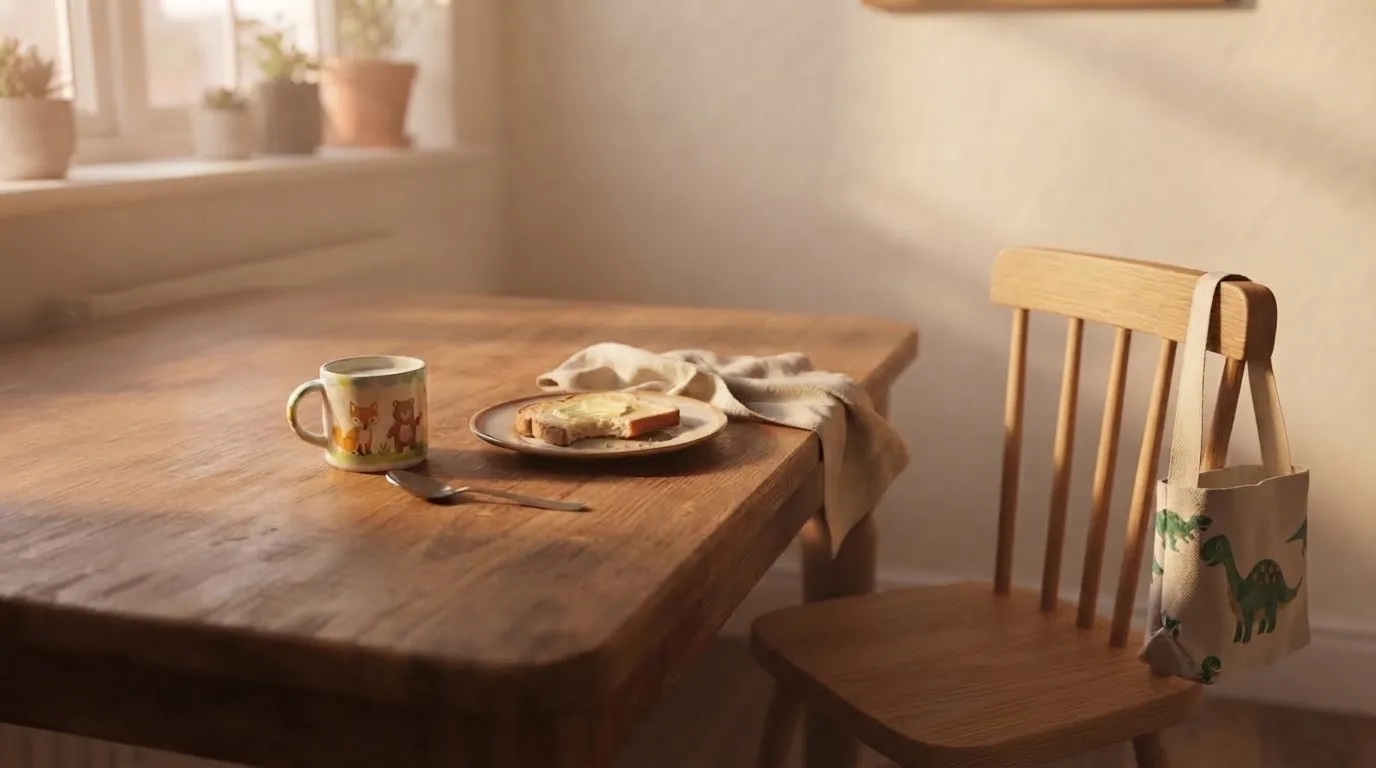

There are stretches when you take fewer photos
Scroll back through your camera roll and you may notice there are hardly any photos from weekdays. And as your kids get older, the number you take in a year keeps shrinking too.
Something I want to say up front: it isn’t that you love them any less. You have fewer chances, and less energy left over.
The dips tend to come at the same points.
- Around the first birthday. In the newborn months, everything was a first — every sleeping face, every yawn. Once the firsts settle down, there are simply fewer reasons to reach for the camera
- After a younger sibling arrives. Your hands are split two ways, and the photos of the older one visibly drop off
- When parental leave ends. Your free time on weekdays disappears. Mornings go to getting ready for daycare, evenings to bedtime, and there’s no gap left to pick up a camera
- Once they start school. They can do more for themselves, and the time you spend doing things together drops off sharply
All of these happen because the shape of your life changed. This isn’t about you falling short.
Spend less time physically together, lose the easy moments that “firsts” hand you, and taking fewer photos is only natural.
Event photos all look alike
It’s not as if you never take photos. Sports day, recitals, birthdays, family trips — on days like those you still take hundreds.
Line those photos up, though, and they look a lot alike from year to year. You stand in roughly the same spot and frame them the same way: from the back of the stands, from in front of the stage, in front of the cake. The count keeps going up, and your kids are surely growing, and yet it’s hard to find what’s changed since last year.
Where you can actually feel the change is on weekdays.
They’ve grown taller. The way they hold their chopsticks has changed. They sound a little more grown-up. The way they hold your hand is different. All of it happens on ordinary days. Events record what happened. But for capturing them growing up, I’ve come to think weekdays do it better.
| Event days | Ordinary weekdays | |
|---|---|---|
| Photos taken | Hundreds | Days in a row with none |
| How change shows | Same framing every year, hard to spot | In their height, their chopsticks, the way they talk |
| What it keeps | What happened | Them growing up |
I wrote about how we arrived at one photo a day in Why one photo a day.
Make it a system, not a resolution
So how do you actually keep them?
“Starting tomorrow, I’ll make a point of taking more” usually doesn’t last. If the cause was running out of energy, trying to make up for it with willpower just breaks down again on the days you have none left. Turn it into steps, so you can take one without having to think about it.
- Set a reminder for a fixed time. Before bed, on the train home — either works. What matters is that it’s the same time every day
- Put the widget on your home screen. It’s in view without opening the app, so you notice I haven’t taken today’s yet
- Decide in advance what you’ll photograph. Today’s face, today’s dinner table, pajamas before bed. Decide ahead and you skip the time spent wondering what to shoot
The third one does the most work. When people stop taking photos, it’s less often because there’s nothing to photograph than because they haven’t decided what to photograph.
Decide that one is enough
The other thing to lower is the target.
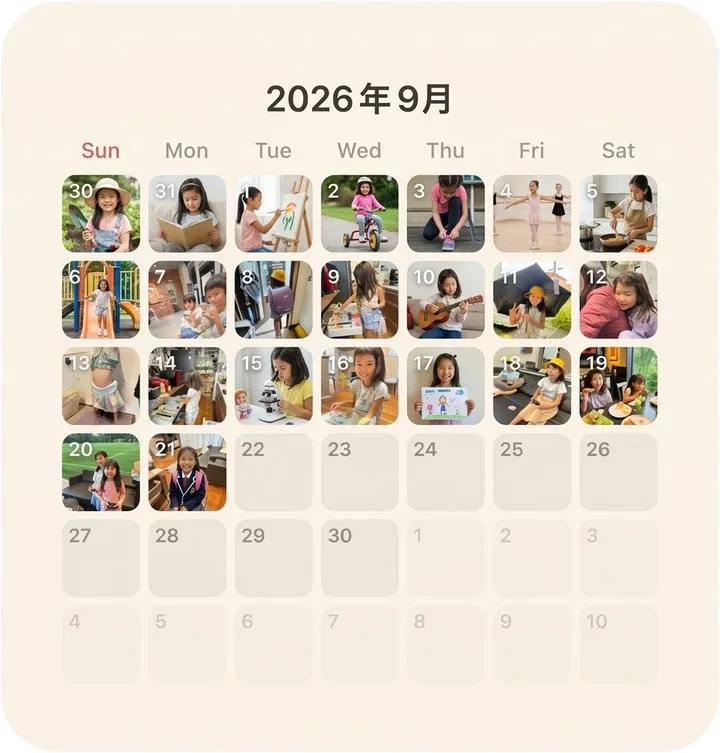
Settle on one photo a day. One photo fits into the short stretch between getting home from work and the kids falling asleep, or halfway through dinner. Set it at three, or five, and on days you can’t hit it you think oh, skip today — and that’s where it stops.
It doesn’t have to be a good photo either. Soft focus, eyes closed — that’s fine. If it brings the day back, that’s enough. The harder you try to take a nice photo, the higher the bar to taking one at all.
Decide one is enough, and you’ll manage it on more days. Manage it on more days, and it lasts.
Miss three days, and you can still come back
Last, the part that matters most.
It’s better not to fill in the days you missed.
Say you went three days without taking one. Go back and try to fill those three in, and you’re back to doing it all at once — and things you plan to do all at once mostly don’t get finished. Leave the three days empty, and start again from today’s.
Gaps are fine. They only mean there was a busy stretch there. When you look back a year from now, the gaps are part of that year too.
If you’ve noticed there are no weekday photos, that’s a fine place to start. Start again with today’s.
